The Social Cost of Public Shaming Online
The Social Cost of Public Shaming Online
Public accountability matters. People should be able to call out cruelty, abuse, discrimination, and dishonesty. Social media has made it possible for voices that were once ignored to be heard loudly and quickly, and in many cases that has exposed real harm that powerful institutions would rather hide. But alongside that progress, we have also built a culture in which public shaming can spread faster than truth, context, or proportionality. What starts as criticism can become a digital dogpile, and the consequences can be severe.
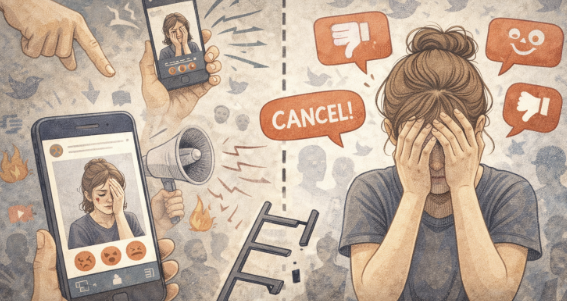
Online shaming is powerful because it is not limited by geography or time. A mistake, offensive post, awkward comment, or badly phrased opinion can be captured, reposted, and judged by thousands of strangers within hours. Sometimes that reaction is deserved. But often the punishment becomes disconnected from the original act. People are not simply criticized; they are turned into spectacles. Their names, faces, jobs, families, and entire histories become targets. The internet rarely asks whether the response is constructive. It rewards whatever is fastest, harshest, and most shareable.
One reason this happens is that public shaming makes people feel morally certain. Joining a pile-on can feel like proof that one is on the “right side.” But outrage online is often performative as much as principled. People are encouraged to react instantly, before they have full information, because silence can be read as complicity. In that atmosphere, nuance becomes risky. Reflection looks weak. The result is a culture where judgment is immediate and mercy is suspicious.
This dynamic affects ordinary people, not just celebrities. A student, employee, or small creator can become the center of national attention overnight with no support system and no real way to respond. Even after the internet moves on, screenshots remain. Search results linger. Opportunities disappear. The punishment can outlast the public memory of the event itself. In some cases, people lose jobs, friendships, or mental stability over incidents that were never fully understood in the first place.
There is also a deeper social consequence. When people believe that any mistake could become permanent public humiliation, they become more guarded, more dishonest, and less willing to speak openly. That does not create a healthier society. It creates a more frightened one. Real growth usually requires room for apology, correction, and change. If every failure is treated as proof of permanent moral worthlessness, then people learn to hide, not improve.
None of this means harmful behavior should be ignored. Accountability is necessary. But accountability should aim to reduce harm, not maximize spectacle. It should care about truth, proportion, and the possibility of learning. A culture that cannot distinguish between justice and humiliation will eventually damage everyone, including those who believe they are only punishing the “bad” people.
The internet has made public judgment easy. The harder task is building a culture that knows when to criticize, when to forgive, and when to let a person be more than their worst moment.

